Minesweeper Classic
Minesweeper Classic
More games to play
Minesweeper Classic
Minesweeper Classic is the version many players still picture first when they think about the genre: a clean grid, simple number clues, and the familiar challenge of clearing the board without touching a mine. This page brings that traditional experience into the browser, which makes it easier to start quickly while still preserving the deliberate logic that made classic Minesweeper so replayable in the first place.
For a lot of players, the appeal of Minesweeper Classic is not flashy presentation or extra systems. It is the purity of the rules. You reveal tiles, study the numbers, mark likely mines, and use deduction to keep the board moving. That direct structure is exactly why the classic version still works so well as both a puzzle game and a long-term skill game.
What Is Minesweeper Classic?
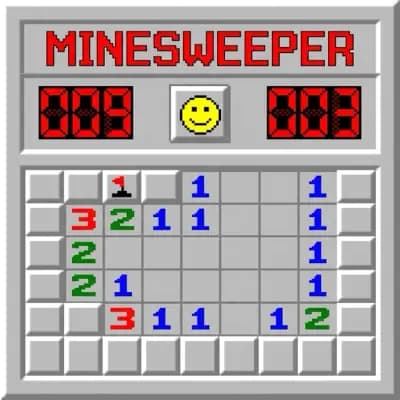
Minesweeper Classic is a logic puzzle built around hidden mines and numbered clues. Each number tells you how many mines touch the surrounding tiles, including diagonals, and that information lets you narrow down where danger must be. The objective is straightforward: open every safe tile and avoid the mines. That sounds simple, but the challenge becomes much more interesting as the board grows and the number patterns overlap.
This browser version stays close to the classic Windows feel by focusing on the standard deduction loop rather than loading the page with unrelated mechanics. You still get the familiar three-difficulty structure, so beginners can learn the patterns on smaller boards while experienced players can jump straight into denser layouts that demand stronger reading and faster decisions.
How To Play Minesweeper Classic
The basic flow is easy to understand. Start by revealing a tile. If the tile is safe, it may either open a blank area or show a number. That number tells you exactly how many mines sit in the surrounding eight spaces. Your job is to use that clue, together with nearby numbers, to decide which neighboring tiles are safe and which should be flagged. The more patterns you recognize, the less the game feels like guessing and the more it becomes a true logic puzzle.
As you improve, you stop solving one square at a time and start reading groups of clues together. A single number may not say much on its own, but several neighboring numbers can force a very specific mine layout. That is where Minesweeper Classic becomes satisfying: progress comes from logic, not randomness, and better reading leads directly to better clears.
Difficulty Levels And Board Feel
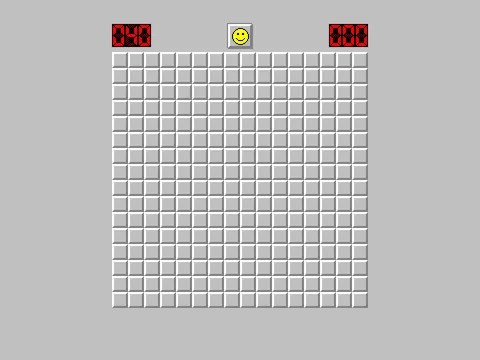
Minesweeper Classic works well because the three main difficulty levels create a natural skill ladder. Beginner boards are small enough to learn the rules and common clue shapes. Intermediate boards introduce more overlapping information and a higher mine density, which makes tracking flags and safe spaces more important. Expert boards demand patience, confidence, and much stronger pattern recognition because mistakes become more costly and the board gives you more complicated clusters to interpret.
Guide material for this version also describes a first-click-safe start, which helps beginners avoid immediately losing the round before any real deduction begins. That quality-of-life touch keeps the opening more readable and gives players a better chance to settle into the puzzle before the harder decisions arrive later on the board.
Why Players Still Prefer The Classic Version
Even with many modern variations available, classic Minesweeper still has a strong audience because it strips the experience down to its strongest core. There is no need to learn a long list of systems before you begin. Everything important is already on the board: the clues, the risk, and the logic. That makes every improvement feel earned, whether you are learning basic flag placement or trying to clear larger boards with fewer pauses and fewer mistakes.
It also means classic play is easier to revisit. You can open the game, solve a few boards, and leave without relearning anything. For players who enjoy pure deduction and familiar rules, that is a major advantage over more experimental variants.
Getting Better At Minesweeper Classic
The fastest way to improve is to stop treating flags as guesses and start treating them as conclusions. Only mark a mine when the numbers force that answer. Once you trust your flags, techniques like chording become much more effective because satisfied number tiles can safely clear larger areas in one action. You will also improve faster if you spend time on Beginner mode learning common shapes such as 1-1, 1-2-1, corner clues, and edge patterns.
There will still be moments where the board tightens and choices become less obvious. That is normal. The goal is not to remove every difficult situation, but to reduce unnecessary guesses by reading more carefully and recognizing more forced placements. That is the skill curve that keeps Minesweeper Classic rewarding over time.
Who Should Start With Minesweeper Classic?
Minesweeper Classic is especially good for players who want the traditional puzzle experience without extra systems getting in the way. If you are learning the genre for the first time, the smaller difficulty settings give you a manageable place to understand clue reading, flag logic, and basic pattern recognition. If you already know the fundamentals, the larger boards make it easy to jump straight into more demanding clears without changing the underlying ruleset you already trust.
That makes this page useful for two different audiences at once. Beginners get a stable place to learn the core language of minesweeper, while returning players get the familiar structure they usually want when searching for a classic version. In SEO terms that is a good fit for this page, but more importantly it is a good fit for the real player intent behind searches like Minesweeper Classic or play Minesweeper Classic online.
Minesweeper Classic Controls
| Control | Action |
|---|---|
| Reveal tile | Left-click a covered tile, or tap on touch devices, to open a square. |
| Flag mine | Right-click a tile to place or remove a flag; on touch layouts, long-press where supported. |
| Chord clear | Double-click, middle-click, or use the supported quick-clear action on a satisfied number to reveal nearby safe tiles faster. |
| Restart board | Use the in-game reset or new game control whenever you want a fresh puzzle. |
| Change difficulty | Switch between Beginner, Intermediate, and Expert from the game controls. |